
Practical guide
Geneva Airport to Turin: Tunnels, Coach or Train – Which Is the Best Way?
No direct train and no flight: between Geneva and Turin everything goes through an Alpine tunnel. Routes, timings and the traps to avoid.
From Geneva Airport to Turin: why the question arises
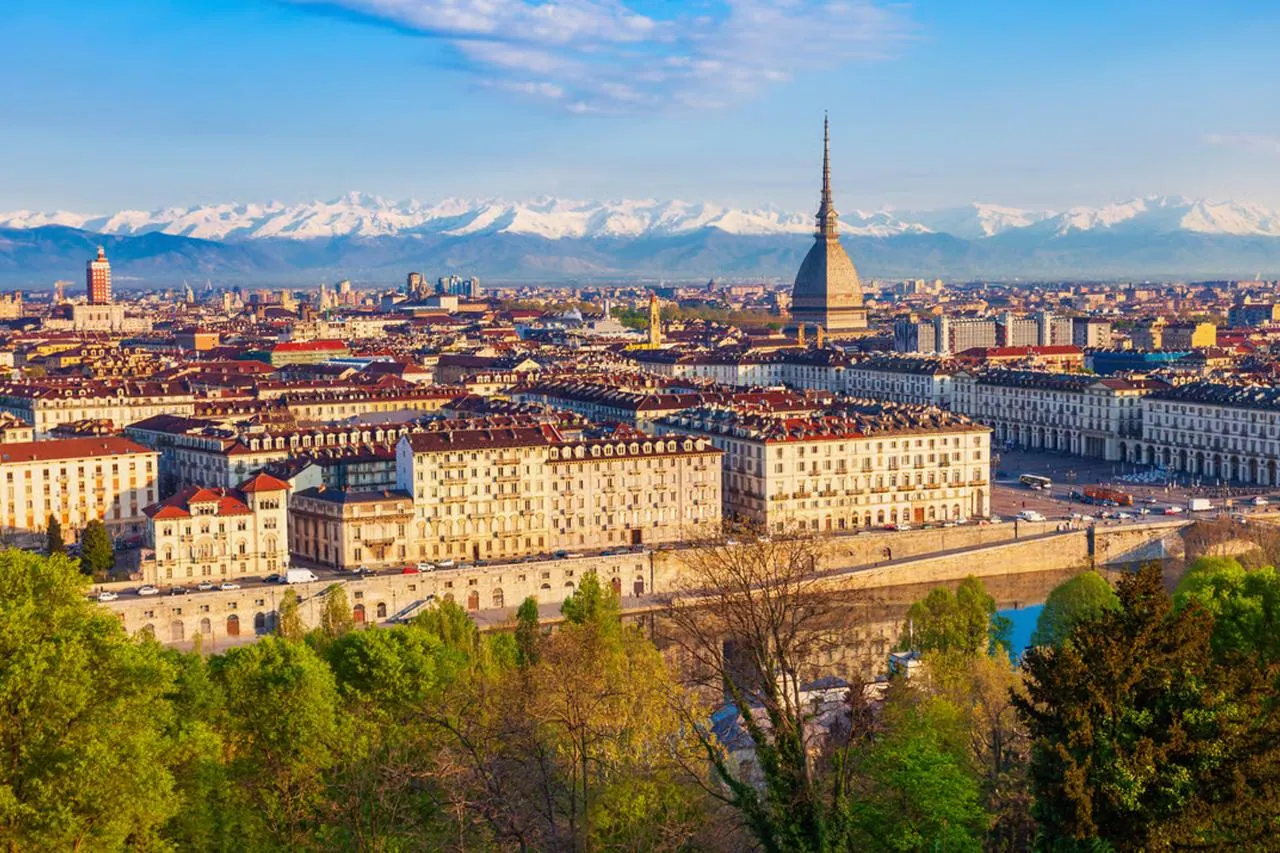
On the map, Turin is very close to Geneva Airport: less than 200 kilometres as the crow flies. But the Mont Blanc massif stands between the two, and no railway crosses it at that point. There is neither a direct train nor a scheduled flight between the two cities. That leaves the road, which must pass through one of the three great tunnels of the western Alps, and some longer rail combinations. This guide reviews them all, starting with the most widely used.
- Via the Mont Blanc Tunnel About 260 km, 3 h 40 to 3 h 50
- Via the Great St Bernard About 315 km, 4 h
- Via the Fréjus About 300 km, 4 h
- By coach 4 to 5 hours depending on stops
- By train 5 hours or more, at least one change
- Borders Two: Switzerland – France, then France – Italy (or Switzerland – Italy via the Great St Bernard)
By road: three tunnels, three approaches
Mont Blanc, the standard route
It is the shortest and, in normal times, the fastest: the A40 motorway to Chamonix, 11.6 kilometres of tunnel, then the A5 motorway via Aosta. Its weakness is its fragility. The tunnel has a single two-way tube and traffic is metered, which creates queues on winter Saturdays and summer weekends. It also closes for works: for several months in the autumn of 2024 and of 2025, with further long closures planned for the autumns of 2027 and 2028, not to mention maintenance nights. Always check the operator's website before leaving.
The Great St Bernard, the Swiss solution
You follow Lake Geneva and the Rhône valley to Martigny, then the pass road up to the tunnel at an altitude of about 1,900 metres. The descent to Aosta joins the A5. The route is longer and includes some thirty kilometres of mountain road on each side, but it avoids France and stays open all year.
The Fréjus, through Savoie
By way of Annecy or Aix-les-Bains, Chambéry and the Maurienne valley, you reach Modane and the Fréjus Tunnel, then the Susa valley. It is almost entirely motorway and is handy for arriving on the western side of Turin or continuing to Sestriere.
In all three cases the tunnel crossing is charged, and the price is well above that of an ordinary motorway payment: more than fifty euros one way for a car at Mont Blanc. The French and Italian motorways also levy charges, and the Swiss section requires the vignette.
By coach: economical, with no change
Long-distance coach companies link Geneva with Turin several times a day depending on the season, usually through the Mont Blanc Tunnel and sometimes with a stop in Chamonix or Aosta. Departures are from Geneva bus station in the city centre and, for some services, from the airport. The journey takes between four and five hours. It is the cheapest solution, provided you accept fixed timetables, limited comfort and arrival at a terminal that may be some way from the centre.
By train: via Chambéry or via Milan
There are two combinations. The first goes through France: a regional train from Geneva to Chambéry, then a high-speed train on the Paris – Milan route, which crosses the Alps through the Fréjus rail tunnel and stops at Turin Porta Susa. With a good connection it takes about five hours, but these international trains are few and far between during the day.
The second goes through Italy: a direct EuroCity from Geneva to Milan in four hours via the Simplon, then a high-speed train from Milan to Turin in one hour. The total comes to five and a half or six hours, but the frequencies are better. In both cases you leave from Genève-Cornavin station, seven minutes from the airport by train.
Driving yourself to Turin: points to watch
- Cross-border car hire. Returning a Swiss hire car in Italy incurs high one-way fees. A round trip with the car handed back in Geneva is far more reasonable.
- The limited traffic zone. The centre of Turin is monitored by cameras; entering without authorisation during restricted hours earns a fine, posted to your home weeks later. Use a multi-storey car park on the edge of the zone.
- Winter equipment. Winter tyres, or chains carried on board, are compulsory from 1 November to 31 March on the French side in the Chamonix valley, and from mid-October to mid-April in the Aosta Valley.
- Tunnel rules. A maximum of 70 km/h and 150 metres between vehicles, enforced automatically.
With a private chauffeur
A chauffeur-driven car takes the same time as a private car, a little under four hours, but without the driving, the parking problem or the return of a hire vehicle. The price is set for the vehicle. It is justified above all for a business trip where travelling time must remain usable, for a same-day return, or for a small group. For a solo traveller in no hurry, the coach or the train is cheaper.
Choosing the right departure time
On weekdays outside the holidays, the Mont Blanc route is dependable. The difficulties are concentrated in a few periods: February Saturdays in the Arve valley, weekends in July and August at the tunnel, and mid-August in Italy around the 15 August holiday. Going through the tunnel before 9 am or after 7 pm limits the wait. If you have an appointment at a fixed time in Turin, allow half an hour in reserve. For the return to Geneva Airport, work backwards from the flight: about six hours before take-off by car, and considerably more by coach or train once connections are added.
Frequently asked questions
Frequently asked questions
What is the quickest way from Geneva Airport to Turin?
By car through the Mont Blanc Tunnel: 3 h 40 to 3 h 50 when the tunnel is open and flowing.
Is there a direct train?
No. You have to change in Chambéry or Milan, and the journey takes at least five hours.
What about a flight?
There is no regular direct air service between Geneva and Turin. A flight with a stopover would take longer than the road.
What if the Mont Blanc Tunnel is closed?
Go through the Great St Bernard Tunnel from Martigny, or the Fréjus Tunnel from Chambéry. Allow about four hours either way.
Are any particular documents needed?
A valid identity card or passport. Travellers who need a visa should check that their Schengen visa covers France and Italy and that they meet the conditions for entering Switzerland.
Where can I buy the Swiss vignette?
Online in electronic form, at the border or at petrol stations near it. It is only needed for the Swiss stretch of motorway.
More guides
-
Geneva Airport to Aix-en-Provence: How to Get There
An out-of-town TGV station, two road itineraries, door-to-door times: the journey from Geneva to Aix-en-Provence explained.
Read the guide
-
Geneva Airport to Aix-les-Bains: The Journey Guide
Direct train from Cornavin, the A41 or a chauffeur: the trip from Geneva Airport to Aix-les-Bains, with useful advice for spa visitors.
Read the guide
-
Geneva Airport to Alpe d'Huez: Travel Time, Route and Transport Options
215 km via Grenoble, a little over three hours: a guide to travelling from Geneva Airport to Alpe d'Huez, and to deciding whether Geneva is the right choice.
Read the guide
Ready to book your chauffeur?
Get your price online in a few seconds, or contact us on WhatsApp — we answer 24/7.